From Interest To Inquiry: A Simpler Way To Guide Equine Business Growth

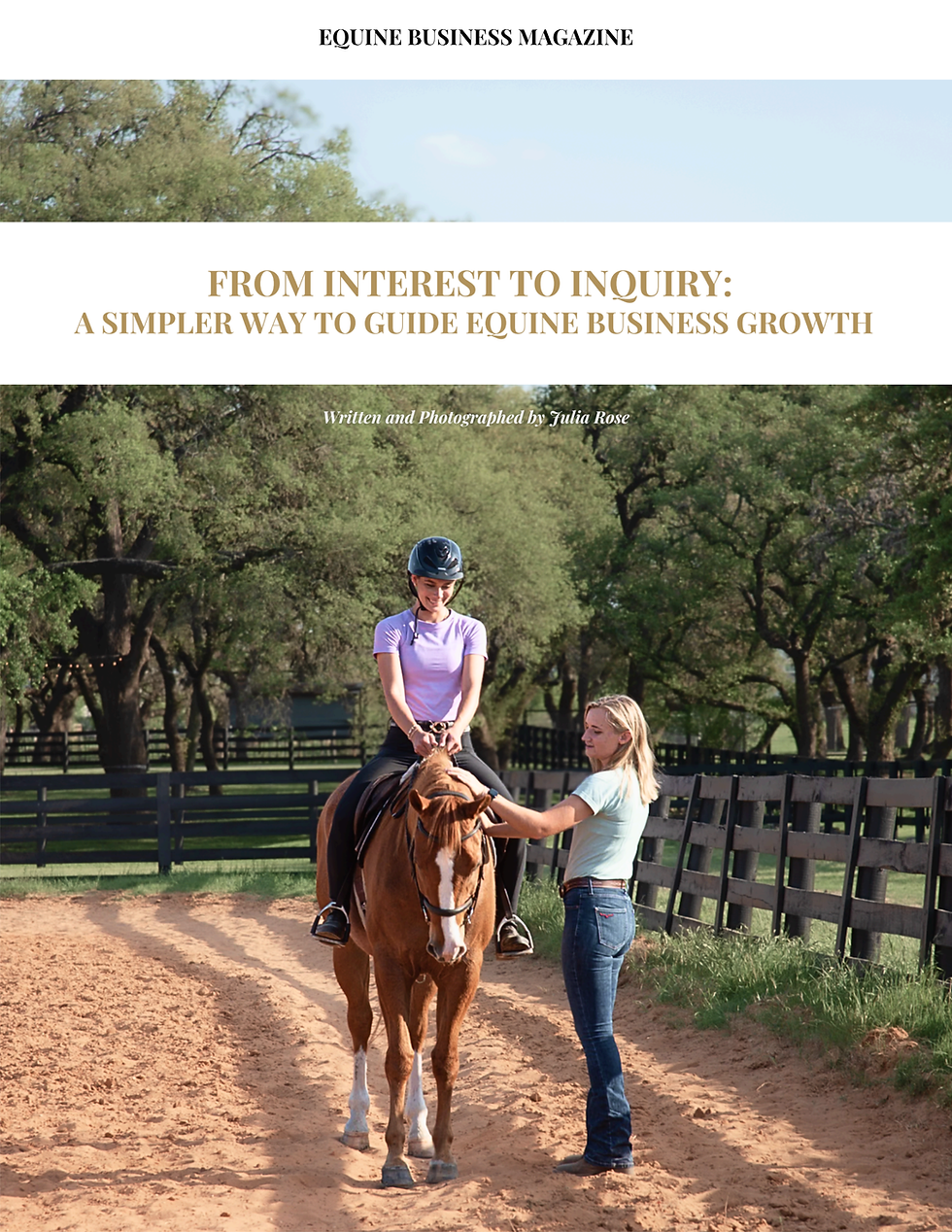
You’re great at what you do. You know people are interested in your work. But when it comes to receiving more consistent, right-fit inquiries, the next steps aren’t always clear.
Many equine professionals run into this—and a recent conversation with an equine business owner brought it into focus.
They were already doing a lot to grow their business—in-person, through print materials, and online—but weren’t receiving consistent inquiries from people who seemed genuinely interested.
What became clear is that while they may be the right fit, most people don’t move forward right away—even if they’ve seen or heard about your work more than once. And there’s a simple way to continue that connection rather than let it fade. What’s worth prioritizing doesn’t require added complexity, pressure, or more time behind a screen. Here’s how you can approach it.
Simplifying Connections into Phases
It can be helpful to start by zooming out and looking at the connections you’re building—in-person and online—in distinct phases.
This is similar to the way you think about guiding riders or horses. Once you’re clear on a goal, breaking it down into steps that build on each other creates clarity and confidence for everyone involved.
The same is true in this second side of your business. When you can see how someone’s connection with your business develops over time across phases, it becomes easier to guide that interest forward without feeling forced or adding unnecessary pressure.
This clarity also highlights the tools you or your team can share with others to support them in this process. Let’s break it down.

Phase 1: Discoverability & Interest
This is where most connections begin.
Someone may have a conversation with you, come across your business through posts or a flyer, or hear about your work through a referral or partnership.
At this stage, they’re becoming aware of what you offer—but they’re still early in their connection with you. The goal here is simple: be discovered, share about your business, and give interested people the right next step forward.
But just like working with riders or horses, offering an advanced next step too soon isn’t ideal. “Sign up” or “purchase” are more advanced steps. Some may move forward quickly, but most people aren’t ready for that yet—even if they like what you do or have been following you for a while.
Often, what’s missing is a lower-pressure, introductory next step that continues building the connection in a more natural and meaningful way. This leads directly into the next phase.
Phase 2: Interest to Inquiry
Consider connections entering this phase when they’ve shown interest in a lower-pressure next step first. For many equine professionals, this is where the most opportunity exists—but also where it’s easiest to stall. A great low pressure next step to share —in person or online—is a helpful resource. Not something promotional, but something interactive—like a guide or checklist—that shares a small, meaningful piece of your thinking or approach to horsemanship they can apply in a simple way.
Beyond seeing or hearing about your work, interacting with a small piece of it on their own helps remove barriers to moving forward. It gives them a clearer sense of what to expect, whether it’s a good fit, and builds confidence in making an informed decision—while giving them something valuable they can learn or try along the way.
You also create a natural way to stay in touch. Following up feels less like promotional pressure and more like continuing the conversation: answering questions, offering support, and helping them move forward with your programs if it feels like the right fit.

Phase 3: LONG-TERM CONNECTION
Current and past clients fall into this phase. At this point in the connection, there is trust, familiarity and shared experience. But they aren’t always aware of what else may be available to them, even if they’d be a great fit for it. If there’s something else they might be interested in, consider sharing it more directly rather than assuming they know. This could be as simple as sharing a printed handout at your next session, or sending a digital graphic through email or text afterward. Inquiries matter here, too.
With these phases in mind, guiding more interest forward becomes clearer—creating more confidence and stronger connection on both sides.

About Julia Rose
Founder, Bridle & Brand
Julia has over six years of experience helping small to midsize business owners clarify positioning, strengthen communication, and support sustainable growth. As the founder of Bridle & Brand, she works with equine professionals to improve how their programs are understood from the outside and supported across conversations, print materials, and online presence. Her perspective is shaped by her professional experience, her background as a second generation small business owner, and her passion for horsemanship living on a working ranch in the Texas Hill Country.
Learn more about her collaborative programs at: www.BridleAndBrand.com
This article is from the April 2026 issue of Equine Business Magazine


Comments