How Coaches Can Bring More Technology Into Riding Without Losing The Art Of Horsemanship


The conversation around technology in equestrian sport has changed dramatically over the last few years. What was once seen as “extra gadgets” for elite riders is quickly becoming part of modern coaching itself.
But for many coaches, the real question is not whether technology matters. It is how to introduce it in a way that genuinely improves training, supports horse welfare, and strengthens rider understanding without replacing instinct, feel, and experience.
Because great coaching has never been about choosing between tradition and innovation. The strongest programs today combine both.
Riders Already Use Technology. Coaches Need to Lead It
Many riders already train with video recordings, WhatsApp feedback, online lessons, wearables, and fitness tracking apps. Junior riders especially are growing up in a digital-first world where immediate feedback feels natural. The challenge is that most of these tools are fragmented.
A rider may receive instructions during a lesson, forget half of them by the next day, send random training videos later in the week, and arrive at the next lesson repeating the same mistakes. Coaches often spend valuable lesson time revisiting concepts instead of progressing training.
Technology becomes valuable when it creates continuity between lessons. That continuity is one of the biggest missing links in equestrian education today.

Coaching Does Not End When the Rider Leaves the Arena
In many sports, athletes leave training with structured plans, performance data, and measurable progress tracking. Equestrian coaching has traditionally relied far more on memory, feel, and interpretation.
That system can work exceptionally well at the top level with experienced riders. But for many amateur and developing riders, information retention becomes a real challenge.
A rider may hear:
“More bend through the body”
“Ride him more forward into the contact”
“Keep the rhythm in the corner”
But by the next ride, much of the details are lost.
This is where modern coaching tools can support and not replace the coach.
Platforms like Equestic are beginning to address this gap through tools designed specifically for equestrian training environments.
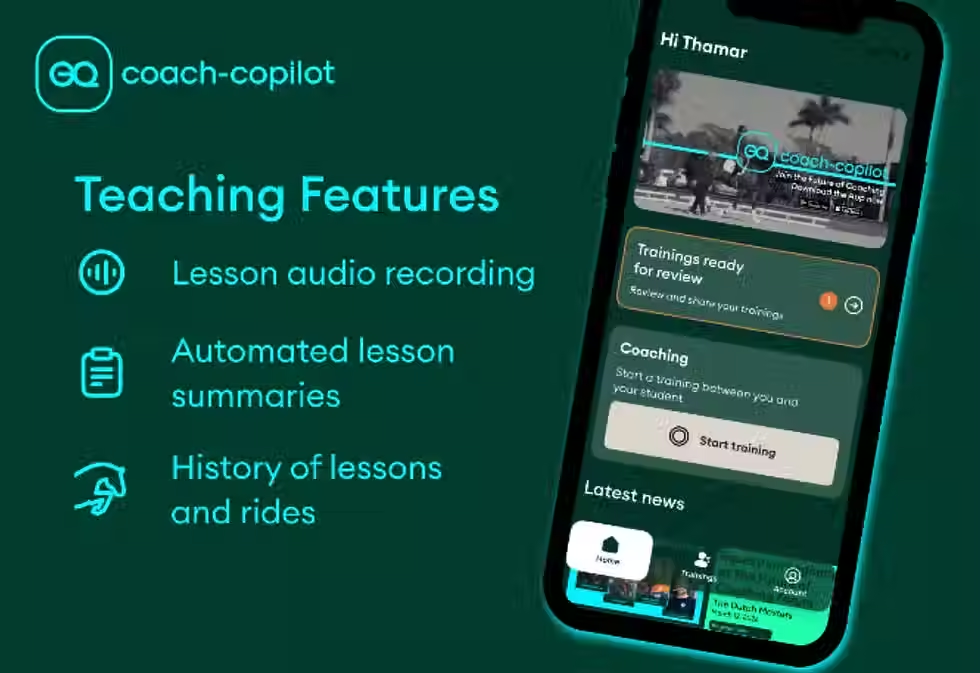
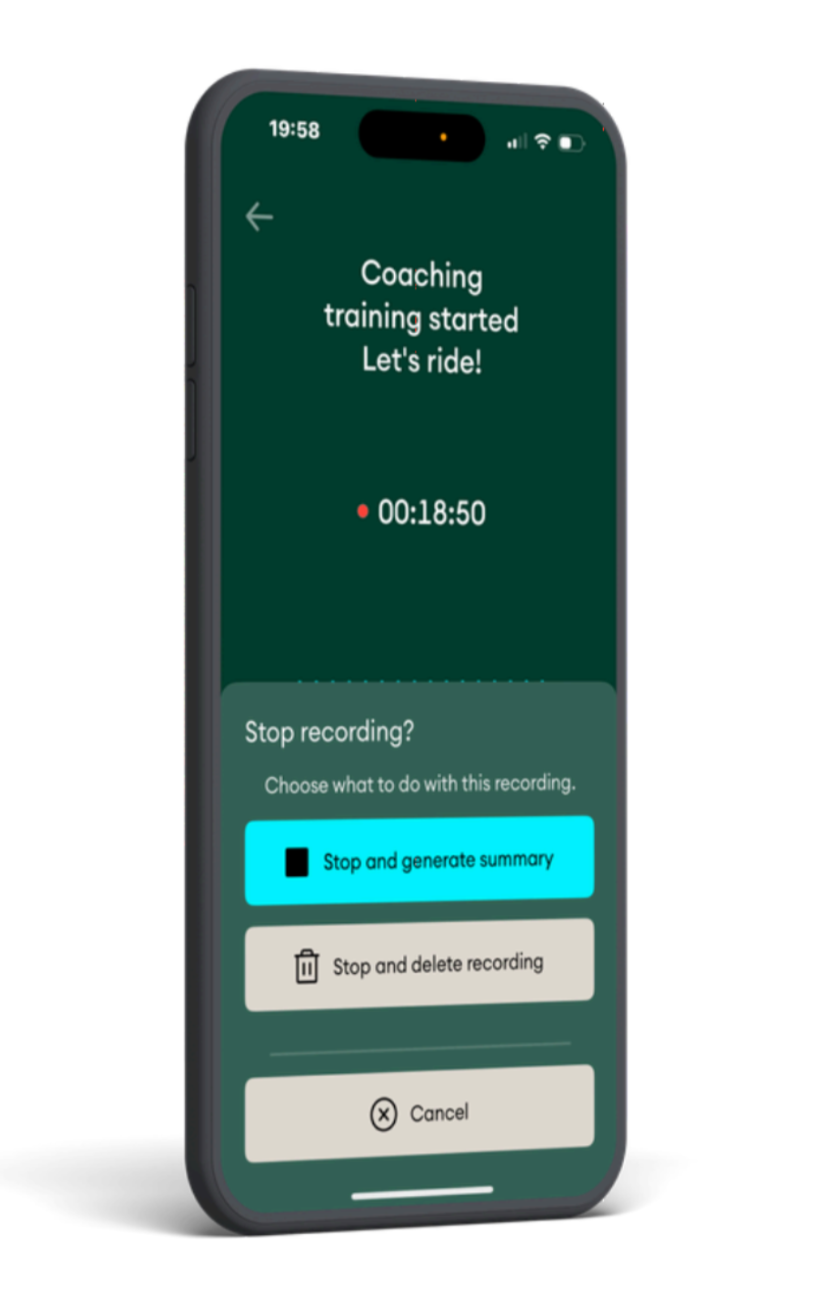
For example, the new EQ Coach-Copilot app allows coaches to record live instructions during lessons and automatically transforms them into structured summaries riders can revisit after training. Instead of relying on memory alone, riders leave with clear takeaways, exercises, and coaching notes they can continue working on independently between sessions.
For coaches managing multiple students, this creates far greater continuity and consistency across training programs.
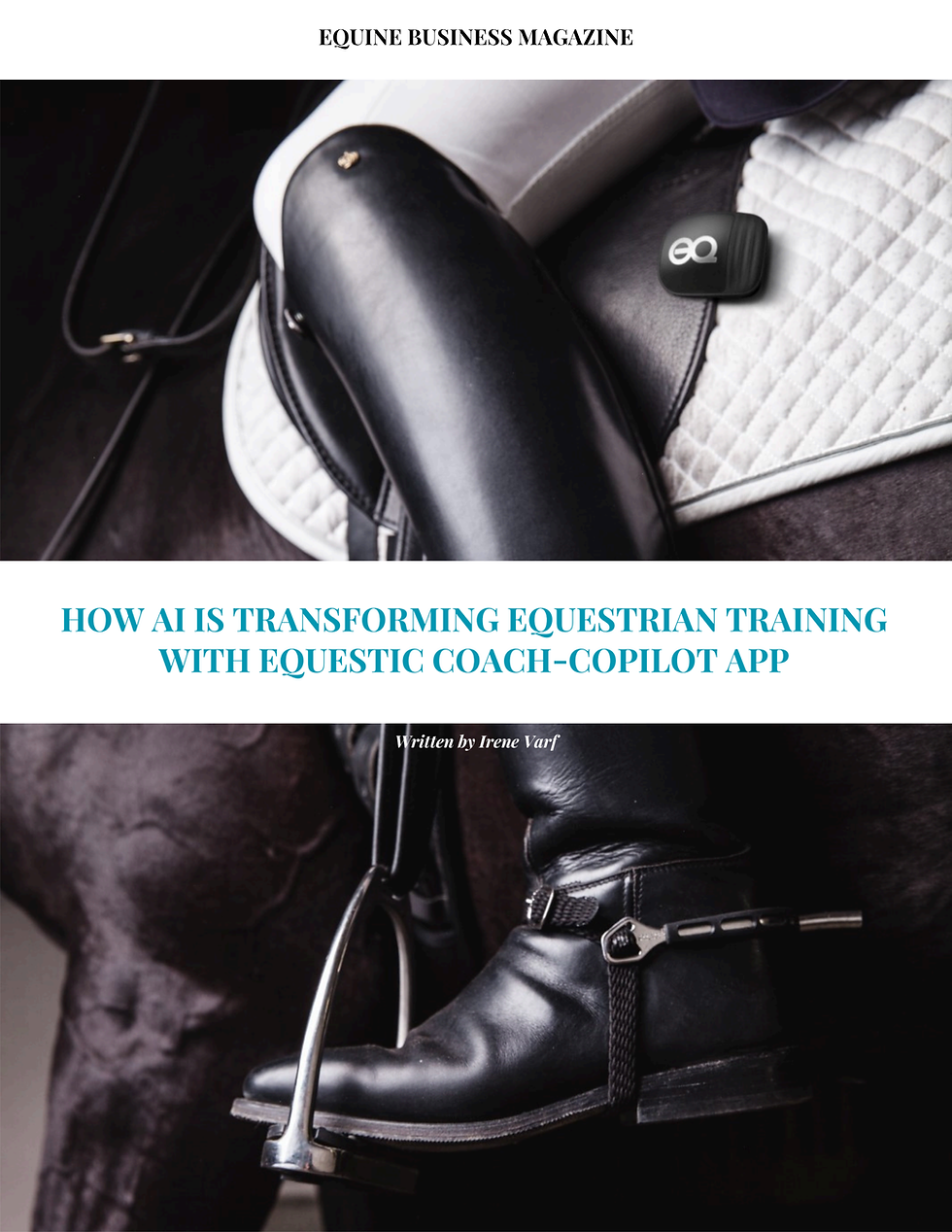
At the same time, EQ Saddle-Clip brings objective movement insights into the coaching process. A motion sensor, that is attached directly to the saddle, tracks over 100 movement parameters including rhythm, impulsion, symmetry, and workload trends. The value is in clearer communication and better learning retention.

Turning Feel Into Measurable Understanding
One of the most difficult aspects of coaching is translating feel into something riders truly understand and repeat consistently.
A coach may immediately notice:
Loss of straightness
Uneven push-off
Changes in rhythm
Fatigue patterns late in training
Reduced engagement behind
Experienced professionals see these details instinctively. But riders often struggle to recognize exactly when changes begin or how they develop during work.
This is where combining Coach-Copilot with Saddle-Clip becomes particularly powerful.
For example:
A coach verbally explains when the horse starts losing balance in collected work
Coach-Copilot captures the instruction in real time
Saddle-Clip data later confirms subtle asymmetry or rhythm changes during the same exercise
The rider can revisit both the explanation and the movement insights after the lesson
The result is a much clearer learning process between coach and rider.
Instead of “trying to remember the feeling,” riders begin understanding patterns more objectively.
The Best Coaches Use Technology to Simplify, Not Complicate
One of the biggest misconceptions around equestrian technology is that it needs to make coaching more technical.
In reality, the best systems do the opposite. Strong coaches already notice rhythm changes, unevenness, tension patterns, fatigue, or rider inconsistencies. Technology simply helps organize and reinforce those observations over time.
For example:
A coach notices a horse consistently losing impulsion late in sessions
Saddle-Clip data confirms asymmetry increases under fatigue
Coach-Copilot lesson summaries help riders understand exactly when and why it happens
The training plan becomes more precise and welfare-focused
This creates smarter training decisions without removing horsemanship from the process.
Riders Learn Differently Today
Modern riders consume information differently than previous generations. They are used to replayable learning, mobile-first communication, visual feedback, immediate access to information, and self-guided improvement between sessions.
Traditional coaching models often depend heavily on riders remembering verbal instructions after a physically and mentally demanding lesson.
That is difficult even for advanced athletes. When coaches provide structured follow-up through tools like Coach-Copilot, riders tend to train more consistently, retain corrections longer, feel more supported between lessons, develop greater accountability, and arrive better prepared for the next session.
In practical terms, this means coaches spend less time repeating basics and more time progressing performance.
Technology Can Also Support Horse Welfare
This is becoming one of the most important conversations in the industry. The future of equestrian sport will increasingly depend on demonstrating responsible, welfare-centered training practices. Technology can help coaches become more proactive rather than reactive.
Movement analysis systems like Saddle-Clip can help identify changes in symmetry, fatigue trends, workload imbalances, early deviations in movement quality, and recovery patterns after injury or time off.
No sensor replaces veterinary expertise or experienced eyes. But objective insights can help coaches spot patterns earlier and make better-informed decisions.
Importantly, this also creates more transparent communication between riders, coaches, physiotherapists, vets, and owners.
In high-performance sport, that collaboration matters.
Coaches Do Not Need to Become “Tech Experts”
One reason some professionals hesitate to adopt new tools is the fear that technology will make coaching more complicated or less personal.
In reality, the most successful adoption happens when technology stays almost invisible.
The coach still coaches. The rider still rides. The horse still tells the truth.
Technology simply helps preserve information, organize training insights, and improve communication consistency. The goal is to support better learning and more thoughtful decision-making.

The Future of Coaching Is Human-Led, Technology-Supported
The equestrian world is unlikely to move toward fully automated coaching, nor should it.
Feel, timing, empathy, experience, and horse management remain deeply human skills. No algorithm can replace the instinct of an experienced trainer watching a horse go down the long side for the first time.
But the industry is entering a new phase where coaches who successfully combine traditional expertise with modern tools may gain a significant advantage.
Not because technology replaces coaching. Because it strengthens the relationship between coach, rider, and horse.

Leon Rutten
Founder of Equestic
Founded in the Netherlands in 2019 by Leon Rutten, Equestic is the consumer brand of Smart Horse Technologies B.V. It was built on his family’s equestrian coaching heritage and strengthened by over 30 years of software and hardware product leadership.
Blending deep knowledge in equestrian sport with cutting-edge expertise in artificial intelligence (AI), product engineering, and marketing, Equestic is focused on innovations that genuinely support coaches, riders, and their horses.
Equestic’s mission is to “help riders and coaches perform with care.”
For more information visit https://www.equestic.com/
This article is from the June 2026 issue of Equine Business Magazine


Comments