SEE MORE TO KNOW MORE: Why Incorporating Thermal Imaging Into Your Horse’s Care Can Be Beneficial

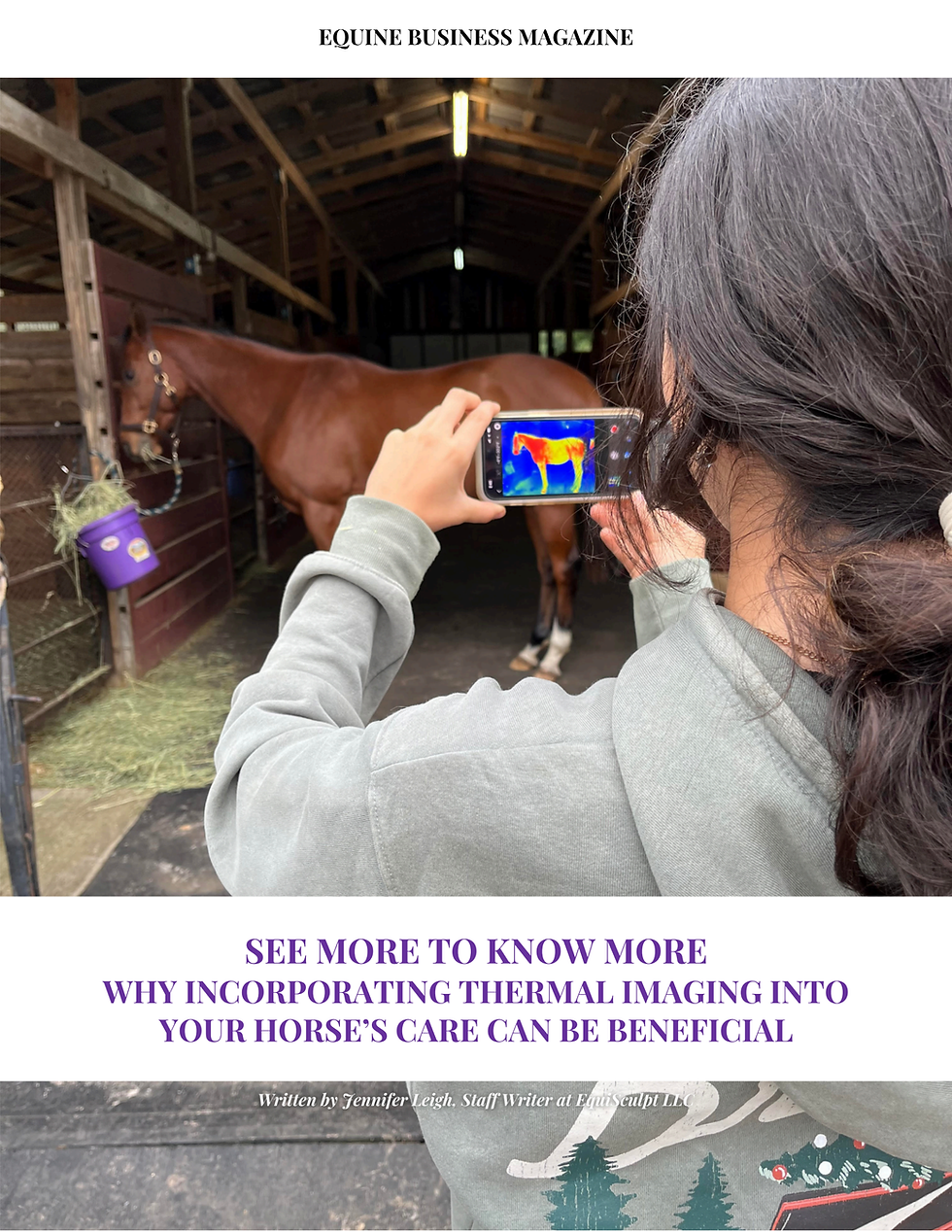
Thermal imaging has been around a lot longer than most people realize dating back to the 1930s, when initial uses began to address military needs. By World War II, thermal devices let soldiers detect enemy troops and equipment even in darkness.
Still, early models were large and required cryogenic cooling, which is a technology to keep sensors sensitive enough to detect even faint heat sources.
By the 1990s, thermal imaging devices entered civilian markets as costs were lowered, and the technology became more compact. Thermal cameras found new applications in firefighting, law enforcement, and search-and-rescue as they helped locate heat sources like trapped people or hidden suspects.
Industrial applications expanded too. Thermal devices were first used to monitor building efficiency, detect overheating machinery, and prevent equipment failures.
Decreased costs allowed thermal imaging to become an accessible tool for a broader audience, and the variety of applications began to grow exponentially.
In the early 2000’s thermal imaging began to cross over into the medical industry. Some of its uses include being able to see veins in patients for easier insertions of needles, finding the source of back or neck pain, and detecting early changes in breast tissue for cancer screenings.
In the last 15 years there has been a crossover from using thermal imaging in human medicine to animal medicine. Our company mostly focuses on the PEMF (pulsed electro magnetic therapy) side of horse health care. Recently we’ve found ourselves using our thermal camera much more. For us, pinpointing problem areas helps us know where to focus using the PEMF on. Because we are finding it beneficial to have a thermal camera in our barn, we thought it would be a great time to spread more awareness to other horse enthusiasts. In this article we go over some of the pros and cons of adding this technology to your horse’s healthcare routine.

Pros of using thermal imaging on your horse
1. Pinpoint “hot spots.” Thermal imaging can help you immediately spot an abnormal heat pattern which can mean inflammation. From here you know exactly where to investigate further. This can be helpful for things like detecting a hoof abscess.
2. Healing checkup. Thermal imaging can be used for weekly check-ups on the healing of injuries. It’s helpful in injuries such as a suspensory ligament tear or a bowed tendon.
3. Find decreased circulation. Abnormal cool areas may indicate decreased circulation from injury or a pinched nerve. (Using PEMF or other therapies on these areas to increase blood flow and restore circulation can be beneficial).
4. Saddle fit. After riding in a saddle for 5-8 minutes (without a saddle pad) remove the saddle and image the horse’s back and the bottom of the saddle. Thermal imaging can show saddle pressure points letting the user know if a saddle should be purchased or if an existing saddle may be causing pain.
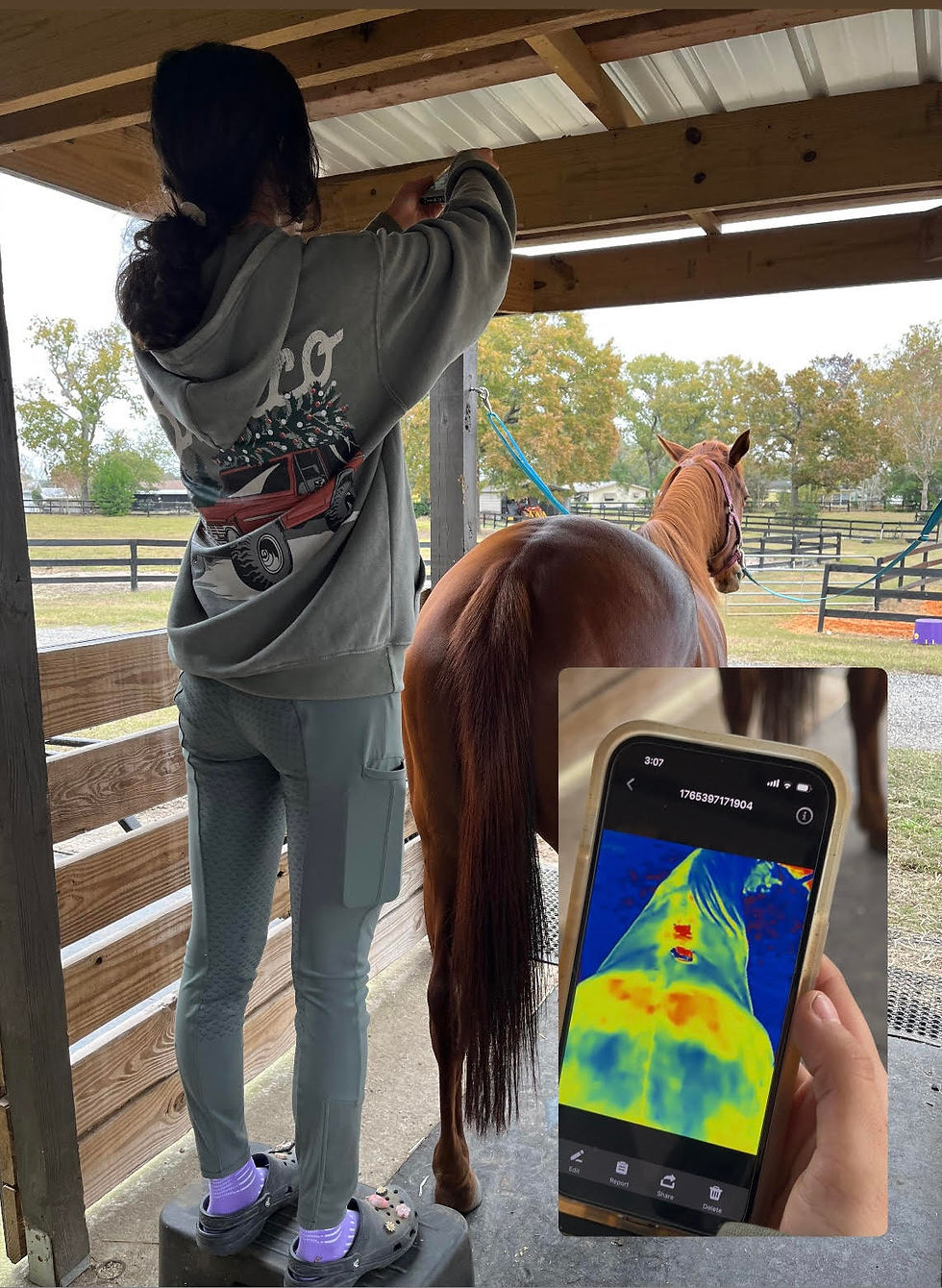
5. Preventative maintenance. Using the thermal camera you can do a full body scan once per week to find any abnormal areas before they become a problem.
Cons of using thermal imaging on your horse
1. False readings. Today’s thermal imaging cameras are so sensitive they can even pick up footprints after someone has walked across a hard floor. The user needs to be educated in thermography to make sure proper imaging protocol is followed so that false readings are avoided.

2. Artifacts. If your horse spills water on its leg or is standing in the sun right before imaging, the cameras will pick up the temperature differences on the skin, but these are not problem areas rather they are artifacts. This is why once the user sees a thermal anomaly the area needs to be investigated further.
3. Limited depth detection. For the most part thermal imaging reads surface areas only. If there is an underlying problem such as soreness in a hock or stifle joint (which has thin skin) the pain and inflammation will radiate to the surface area which the camera can pick up. Deeper things such as ulcers, pregnancy, or an inflamed intestine, will not be detected by the thermal camera.
4. Thermal Imaging does not diagnose the problem. Thermography is designed to show temperature patterns. Once you understand what you are looking at it’s easy to spot irregularities. Further diagnostics by a medical professional such as radiographs or an ultrasound are usually needed to make an actual diagnosis.

As horse owners we love having a handy tool that’s cost effective and noninvasive to quickly show us more about our horse’s health. When doing research on thermography and thermal imaging you will find a wide variety of cameras with varying prices. Some of the very powerful thermal cameras that are used in the building industry can cost thousands of dollars. And while having a powerful tool like that would be nice it really is overkill for basic equine imaging. We use a small camera that connects to our mobile device. It has an IR resolution of 512 x 384 which we find is capable enough to do the things mentioned in this article.
If equine thermal imaging interests you but you are not sure what to do next we have the camera we use available at: store.equisculpt.com. Purchase of the camera includes a 20 page thermal imaging guide. The guide shows you step by step how to do imaging correctly along with examples of injuries and what they look like in thermal images. Having a thermal imaging camera at your barn is a great way to give yourself peace of mind, knowing when a problem arises you have a solution to see more and know more about what’s going on with your horse.

Written by Jennifer Leigh, Staff Writer at EquiSculpt LLC
EquiSculpt specializes in bringing powerful and affordable PEMF machines to the public. Our goal is to allow a wider demographic of people to take advantage of owning a top-quality therapy machine to better the wellness and health of themselves and their animals.
Social Links:
This article is from the February 2026 issue of Equine Business Magazine


Comments