Q&A With Kristin Meligari Of Serendipity Ranch
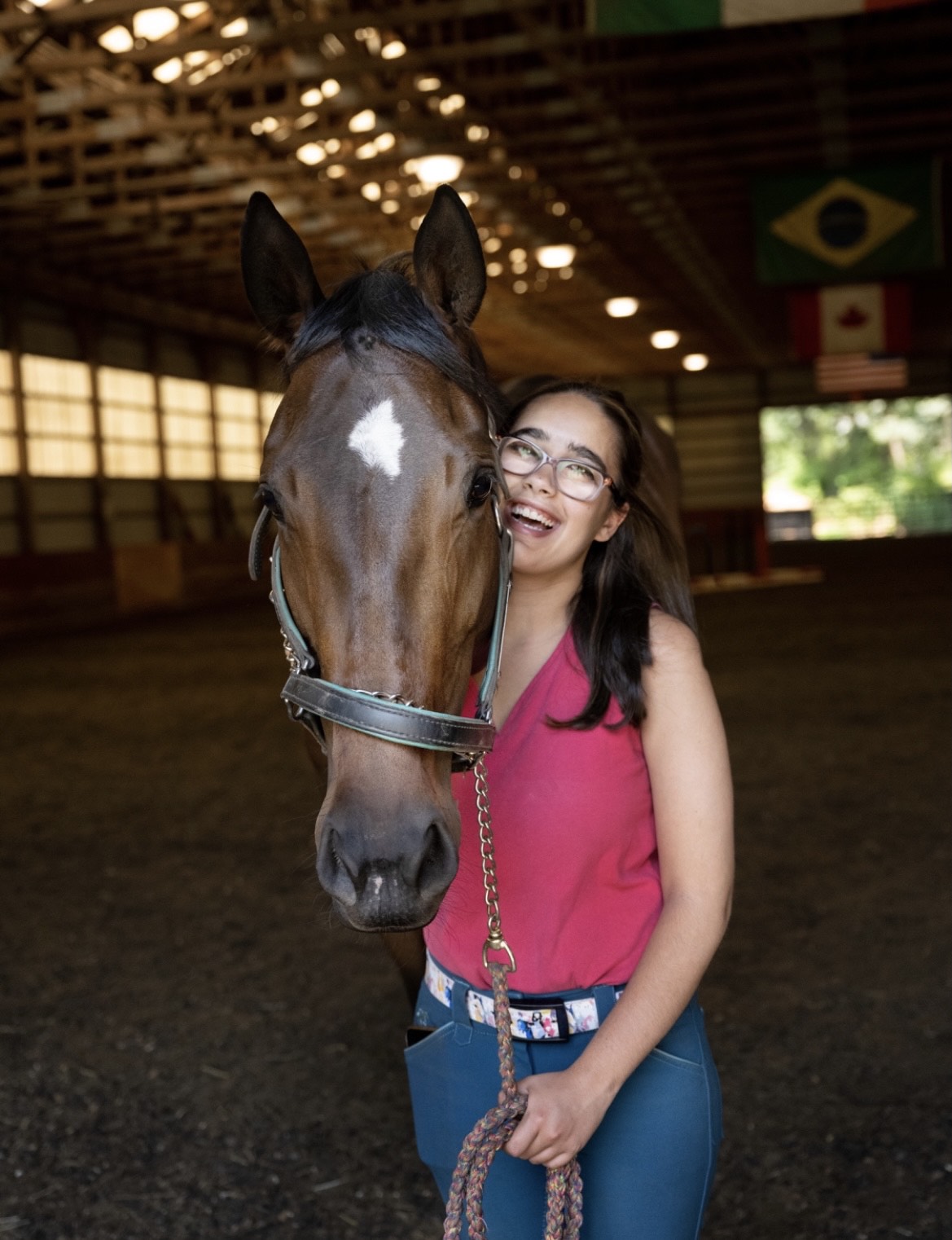
Updated: Feb 17

Diana: Tell me about your childhood. Where did you grow up, and how did you first get involved with horses?
Kristin: I grew up in northwest New Jersey. When most people think of New Jersey, they picture Newark or the Parkway, but Hunterdon County is primarily farmland, state parks, and woods—it was truly the best place to grow up.
As a young child, I begged my parents every year to let me start horseback riding. When I was in kindergarten, my grandmother bought me a western lesson package for my birthday, and there was no going back after that. I was lucky enough to be part of a barn that encouraged young students to become true “barn rats,” and I learned so much about responsibility, horse care, and the delicate balance between running a business and being a good steward of animals.

Diana: Tell me about your junior career. Were there any horses during that time that played a particularly important role in your development?
Kristin: I didn’t grow up in a horsey family, and I certainly didn’t grow up with horse-person money, so I sought out opportunities wherever I could to ride different horses and learn as much as possible. Many of the school horses in my program left a lifelong mark on me—I have a list that’s decades long of all the important ones. They gave me chances to try schooling shows, let me fumble my way through learning groundwork, taught me how to communicate differently with mares versus geldings, and introduced me to the Arabian breed, a love I’ve carried with me ever since.
They were talented, kind, and incredibly tolerant of little me, who didn’t yet know what I didn’t know. I had an amazing barn family growing up, and within that community were incredibly generous mentors who gave me more than I could ever repay, both as a human and as a horseperson. One horse in particular stands out: a stout dun Quarter Horse named Little Chip. He had been a ranch horse in his previous life and had so much to teach me. His owner was incredibly supportive of us as a team, and I truly would not be half the horseperson I am today if he hadn’t come into my life. He was handy, forgiving, and willing, and I learned so much about softness and feel while experimenting across multiple disciplines with him. I think he stands out even more because I’m such a mare person—our lesson program today is all mares—so he was a very special guy in my life.

Diana: Did you attend college? Why or why not? If so, what did you study and where?
Kristin: While I would say that my hands-on education and the continuing education I’ve pursued over the years have been equally important, I did attend college. I went to what is now Rutgers University, but at the time was Cook College. Like most teenagers, I was torn about what I wanted to commit my education—and my life—to, and I originally majored in pre-veterinary studies. As it turned out, New Jersey gave up its contract seats with veterinary schools while I was still an undergraduate. I didn’t have the financial capacity to relocate after graduation, find employment, wait to establish residency in another state, and then reapply to vet school, so I pivoted to an Animal Industries major with a specialization in Equine Science.
Through that program, I learned about the many careers that intersect with the horse world outside the barn, while also gaining a strong foundation in physiology and biomechanics—education that directly paved the way for the rehabilitation work we do in our program today. I’m deeply grateful for that background, as it helped me approach horses through a better understanding of systems like the nervous and metabolic systems. It also gave me the chance to work hands-on with BLM mustangs, participate in nutritional studies, and gain lab experience. It was an expensive way to “try on” different career paths, but it brought incredible people and resources into my life.
Getting to experience IHSA (Intercollegiate Horse Show Association) during that time was the icing on the cake.

Diana: At what point did you know your current discipline was the right fit for you, and what do you enjoy most about it?
Kristin: I’ve tried quite a few western disciplines over the years, but we ultimately settled into western dressage foundations indirectly through our rehabilitation work. Many disciplines can be hard on horses’ bodies, and we’ve seen that firsthand with both our personal program horses and our client horses. Western dressage stood out because it emphasizes horse-and-rider partnership and is rooted in movement that supports and prolongs a horse’s physical longevity.

Diana: How would you describe your training philosophy, and how has it evolved over the course of your career?
Kristin: For our humans, we believe in building horsepeople, not just riders. We educate our students on every aspect of horses from the psychological and nervous system perspective to biomechanics, to groundwork, to proper care because understanding them on many levels makes a student a better partner, more compassionate and patient, it helps shake them off that naughty versus nice horse behavior comparison. Helps them understand the nuances. We especially love involving them in our rehab cases because they get to see in real time that horses aren’t giving us a hard time, they’re having a hard time, and it’s our job to interpret, advocate, and do what we can for them. Our program has also moved towards more bitless work to preserve our school horses’ mouths, encourage our students to focus on their legs and seat, and we love watching them realize how soft they can be and still get that response from their partners. We do so much balance and strength work from the beginning to help riders identify their asymmetries and weak spots and just really tune into a new level of body awareness and feel. As far as the horses go, I would say the biggest evolution in our program is that the more we understand about horse bodies, the less conventional “training” we end up doing.
Once upon a time, I would have said that we skew towards the natural horsemanship philosophies, and we do, but these days the large majority of our work ends up being networking with our team of practitioners, trimmers, bodyworkers, chiropractors, vets, etc. to put all the puzzle pieces together that the horse is giving us, unwind the issues the horse is having be it old injury, compensation, acute issues like lyme, EPM, PSSM, etc. and get them back to a physical baseline where they are physically capable of answering our questions. So many times, owners get stuck thinking a horse “won’t” when it “can’t”. Getting to be a witness to a horse who finally feels good in their body is an overwhelming gift and we are so grateful for our clients who trust us to help them keep searching for answers for their horses.

Diana: Who have been the most influential trainers or mentors you’ve ridden with, and what lessons from them do you still carry with you today?
Kristin: I’m an amalgamation of every trainer and mentor I’ve ever had, every book I’ve read, every clinic I’ve watched, and every class I’ve taken. I’ve gathered the pieces that resonated with me, and I’m still learning every day. We live in a time when information is incredibly accessible, and there are so many talented horsepeople sharing their work from every corner of the world.
That said, the most influential teachers I’ve had are the horses themselves. They’ve taught me about intelligence, sensitivity, and the importance of slowing down, quieting the noise, being present, and truly listening.

Diana: What are some challenges unique to being a professional horse trainer that people outside the industry may not fully understand?
Kristin: For someone starting from scratch, the biggest challenge is the sheer overhead involved—horses, tack, equipment, and facilities are an enormous financial lift. On a broader scale, one of the biggest challenges in the horse industry is keeping horses and support for their owners accessible to people who are not high-income earners. Horses are incredibly valuable not only for sport but also from a therapeutic perspective. Balancing accessibility with margins that sustain a business—while still providing proper care, ample hay, maintenance, and well-fitted tack—is a constant challenge.
Another major challenge is finding the balance between a horse “earning its keep” and not being overworked. We want horses to stay fresh and enjoy their jobs, while also being safe if they need time off for injury or illness. Ideally, they’re also safe and secure when it’s time to retire, living out their days with us. In most sports, you can put the (soccer) ball on the shelf during downtime. In the horse industry, no matter what’s happening—economically or weather-wise—the horse still needs daily care, and the facility still needs to be maintained.

Diana: Is there a particular horse or training success story that stands out as especially meaningful in your career?
Kristin: From a riding instruction standpoint, while we teach western disciplines, much of our curriculum applies to any horse in any saddle. We love showing people that they can get responses with the gentlest of asks. There are several success stories that stand out.
We work with many riders who are navigating trauma from past accidents or toxic training environments, and any of those “one percent” breakthrough moments are incredibly meaningful. With our horses, one training client in particular stands out. He came to us with concerning behavioral issues, and his owner was beside herself. After a thorough investigation into his history, genetics, and symptoms, we had him tested and treated for multiple issues. He was ultimately treated for EPM, and many of his so-called “behavioral” issues disappeared.
He grew like a weed, rebuilt muscle mass, and truly blossomed. He still had a long road ahead to return to a fully comfortable physical baseline, especially due to complications from shoulder surgery earlier in his life, but his owner was overwhelmed with relief. She told me she genuinely thought she might have to put him down because of his past behavior.
That moment hit me like a truck. He was only four years old when we met him—so intelligent, with so much life ahead of him. Knowing that he now has the chance at a long, happy life because we refused to stop searching for answers was incredibly powerful. Rehabilitation work is hard and often emotionally exhausting, but those moments make it all worth it.
To learn more about Kristin and Serendipity Ranch visit her website at www.serendipityvillage.com.

Written by Diana Bezdedeanu
A native of Westwood, Massachusetts, Diana Bezdedeanu is the founder and lead practitioner at Horses Offering People Education (HOPE in MA), an unmounted equine-assisted learning program. She has written for Sidelines Magazine, Community Horse, and Westwood Living. Diana is the proud owner of two retired bay off-the-track Thoroughbred mares, Coffee and London.


Comments