Q&A with Tatiana Perez of Royal Hands Equine Services
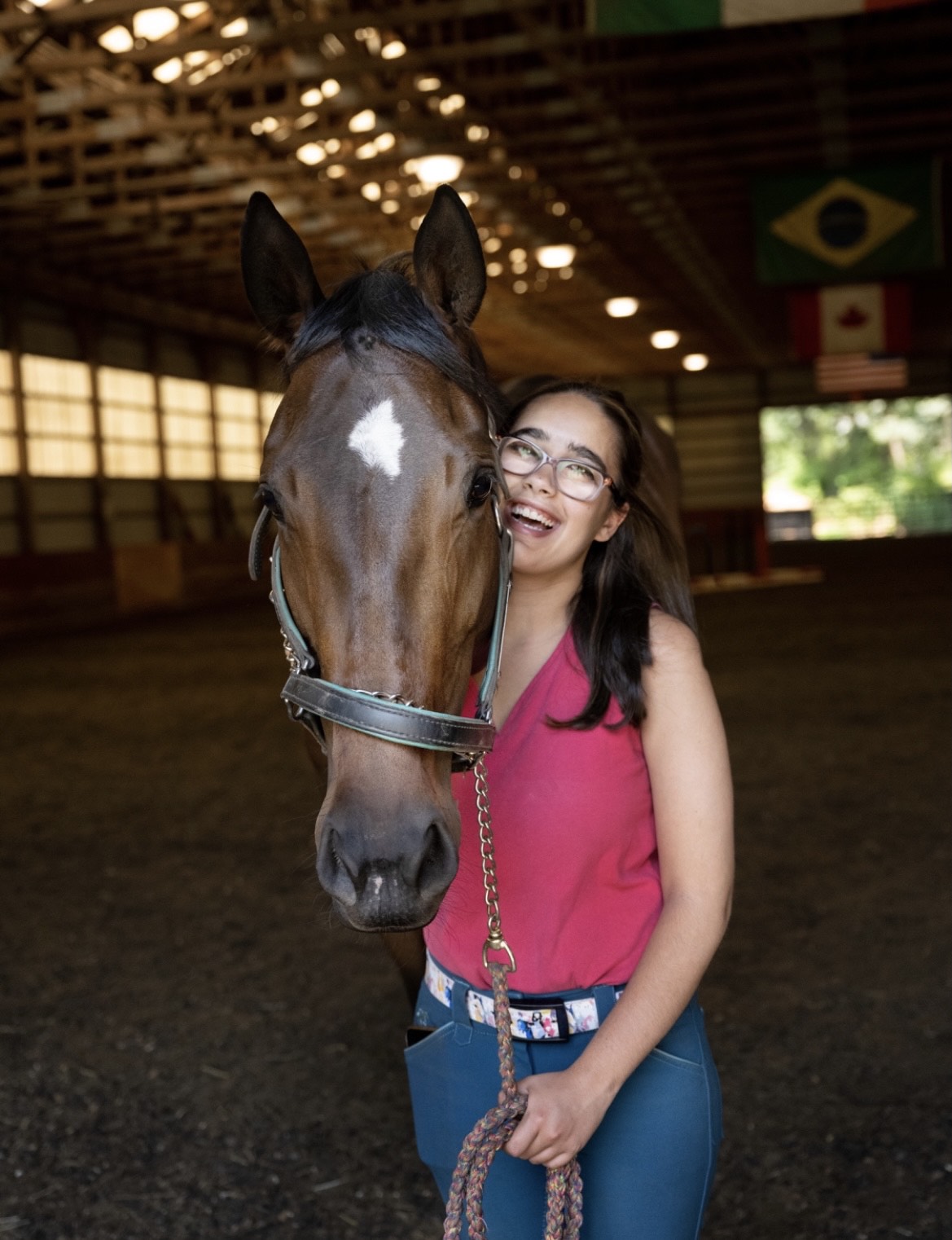

DIANA: Where did you grow up, and what was your introduction to horses?
TATIANA: I grew up in Maryland and began riding at a young age, though I didn’t become deeply involved until I was old enough to work for my own lessons. Like many horse-crazed kids, I quickly became hooked and never looked back. Horses were also central to my family life. My father breeds and trains Paso Fino competition horses in Puerto Rico, and every visit there was spent surrounded by them. From long family trail rides to full days at the farm, horses have always been a constant in my life and a passion that has shaped who I am today.
DIANA: Was there a particular horse, injury, or experience that inspired you to explore equine massage and PEMF therapy?
TATIANA: My own horse ultimately inspired me to pursue this career. My OTTB required kissing spine surgery, and going through that process forced me to deeply educate myself on the importance of maintaining a horse’s physical health. After surgery, I felt like I was simply handed my horse and told “good luck,” with little guidance, proper information, or ongoing support. That experience truly fueled my passion for helping other owners navigate rehabilitation and long-term soundness with confidence and clarity.
Supporting the horse’s body is one of the most important steps an owner can take, whether to help prevent injuries or properly support recovery through rehabilitation. Modalities such as massage and PEMF therapy help improve circulation, reduce muscle tension and inflammation, support nervous system regulation, and encourage healthier movement patterns, all of which are critical during both recovery and maintenance. If my work can help a horse heal, move more comfortably, and feel their best, then I am fully committed to being there—not only for the horse, but as a strong and reliable support system for the owner as well.

DIANA: What training have you completed, and how did you choose the modalities you now offer?
TATIANA: I am certified in equine massage, kinesiology taping, and craniosacral therapy through Angel’s Animals LLC, founded by Dr. Angelique Barbara. I am also certified in the Graston Technique LLC, which allows me to effectively address fascial restrictions and support tendon health.
I founded Royal Hands Equine Services initially as a massage-only service and quickly expanded to include additional modalities that better complement and enhance my work. Graston is excellent for targeting fascia and supporting tendon strength, while kinesiology taping is helpful for supporting and relieving extremely restrictive areas. What I love most about this profession is that the learning never stops—there is always more to explore, refine, and grow. Continuing education allows me to expand my skill set and provide the highest level of care to every horse I work with.
Before starting my own business, I shadowed and trained under an equine bodyworker in Frederick County, and I am proud to now be celebrating six years of Royal Hands Equine Services. Currently, I am continuing my education under the guidance of Dr. Stephanie Davis, further expanding my training to better support my clients and their horses.
DIANA: What types of horses or disciplines do you most commonly work with, and does your approach change depending on their job?
TATIANA: I am fortunate to be located in the heart of Area II, so the majority of my clients are eventers. I also work with some hunter and dressage horses, though they make up a smaller portion of my practice. My approach varies from horse to horse—not so much based on discipline, but on the horse’s personality and what their body needs at that moment. A horse in rehabilitation requires a very different session than one preparing for competition. Listening to the horse in front of you and adjusting accordingly is essential, and I believe it’s one of the most important skills any equine professional can have.

DIANA: What are some common physical issues or patterns you see in your clients?
TATIANA: I most commonly see tension in the back, restricted movement at the base of the neck, and limited pelvic mobility. These issues are especially common in jumping and dressage horses due to the unique biomechanical demands of their disciplines. Jumping horses often carry more weight on the forehand when approaching and clearing fences, which can strain the cervical and thoracic spine and lead to compensatory tension in the back and pelvis.
Dressage horses require consistent engagement of the hindquarters, collection, and precise spinal mobility, which can place repetitive stress on the neck and pelvic regions if muscles are not balanced and supple. Over time, these patterns can reduce range of motion, limit performance, and contribute to soreness or uneven movement.

DIANA: Can you share a particularly memorable case where bodywork made a noticeable difference for a horse?
TATIANA: In one case, I worked very closely alongside a veterinarian to support a horse with spinal cord and nerve root problems. At the initial visit, the horse was unable to fully lift his right front limb without becoming unstable and often swayed as he attempted to move. His range of motion in the neck was severely limited, and when asked to step forward, he would shift his weight onto his hind limbs before taking that first step.
We began PEMF therapy twice weekly, keeping the intensity as low as possible and adjusting each session based on his response. Within two weeks, he became noticeably more stable. Four months into consistent therapy, he returned to normal movement, gained healthy weight, became comfortable and confident in turnout, and now moves as though the neurological deficits were never present.

DIANA: How do you collaborate with veterinarians, farriers, trainers, and other bodywork professionals?
TATIANA: Collaboration with veterinarians, farriers, trainers, and fellow bodywork professionals is extremely important to me. At the end of the day, we all share the same goal: keeping the horse as healthy, comfortable, and happy as possible.
When I am involved in a horse’s rehabilitation, I stay in close communication with the veterinarian to ensure the horse is receiving the maximum benefit from each session and that my work supports the overall treatment plan.
I’m fortunate to work closely with Dr. Chad Davis and Dr. Stephanie Davis, and with their clients we maintain ongoing communication to stay aligned and quickly address any updates or changes in the horse’s care.
DIANA: What misconceptions do people often have about equine massage or PEMF therapy?
TATIANA: One common misconception about equine massage is that it’s just a “spa day” for horses. While it is relaxing, massage is a targeted therapeutic tool that helps release muscle tension, improve circulation, enhance flexibility, support joint health, and promote mental relaxation. Massage can help prevent injuries, improve performance, and speed recovery after work or rehabilitation, making it a crucial part of maintaining overall well-being.
PEMF therapy is another area where misunderstandings are common. Some people view it as a “holy grail” of bodywork. In reality, PEMF works best as a complementary modality. While it supports circulation, reduces inflammation, and aids nervous system function, it cannot specifically target individual muscles the way hands-on bodywork can. Combining massage with PEMF allows horses to receive the full benefit of both approaches, addressing both deep tissue needs and overall health.
DIANA: What is your service area?
TATIANA: I primarily service the Washington metropolitan area (DMV). I travel as far north as Monkton, Maryland; as far south as Warrenton, Virginia; and also serve select areas of West Virginia.
DIANA: Where do you see your business heading in the future, and are there any new modalities you’re excited about?
TATIANA: One of my main goals is to become certified in canine massage so I can offer bodywork for dogs in addition to horses. I also plan to complete an osteopathy program for both equines and canines, and there is already a school that has strongly caught my interest. My most important professional goal, however, is earning my NBCAAM certification, which I see as a critical step in building a strong, credible foundation for my practice.
All of these goals are part of a bigger vision. Long term, I hope to open my own facility where I can provide specialized, holistic rehabilitation services for equines at every stage of life—a space where horses can heal, retrain, and truly thrive through a full-body approach to wellness and recovery. This work is something I am deeply passionate about, and I am excited for the journey ahead.

Tatiana Perez
Royal Hands Equine Services
Growing up as the daughter of a horse trainer, Tatiana always wanted to work in the equestrian industry helping horses and their owners. She fell in love with bodywork after seeing the incredible physical transformations that are possible with patience and consistency.
At Royal Hands Equine, we have an all-inclusive approach to bodywork so you can maximize the benefits for your beloved horse. Whether your horse is for pleasure riding, competing, is retired, or rehabbing from an injury, our services support their physical and mental well being every step of the way.
Website: royalhandsequineservices.com

Written by Diana Bezdedeanu
A native of Westwood, Massachusetts, Diana Bezdedeanu is the founder and lead practitioner at Horses Offering People Education (HOPE in MA), an unmounted equine-assisted learning program. She has written for Sidelines Magazine, Community Horse, and Westwood Living. Diana is the proud owner of two retired bay off-the-track Thoroughbred mares, Coffee and London.
This article is from the March 2026 issue of Equine Business Magazine


Comments